
4 ISLANDS BY SPEEDBOAT FROM KRABI
ONLY WITH PANDA PHUKET TOUR
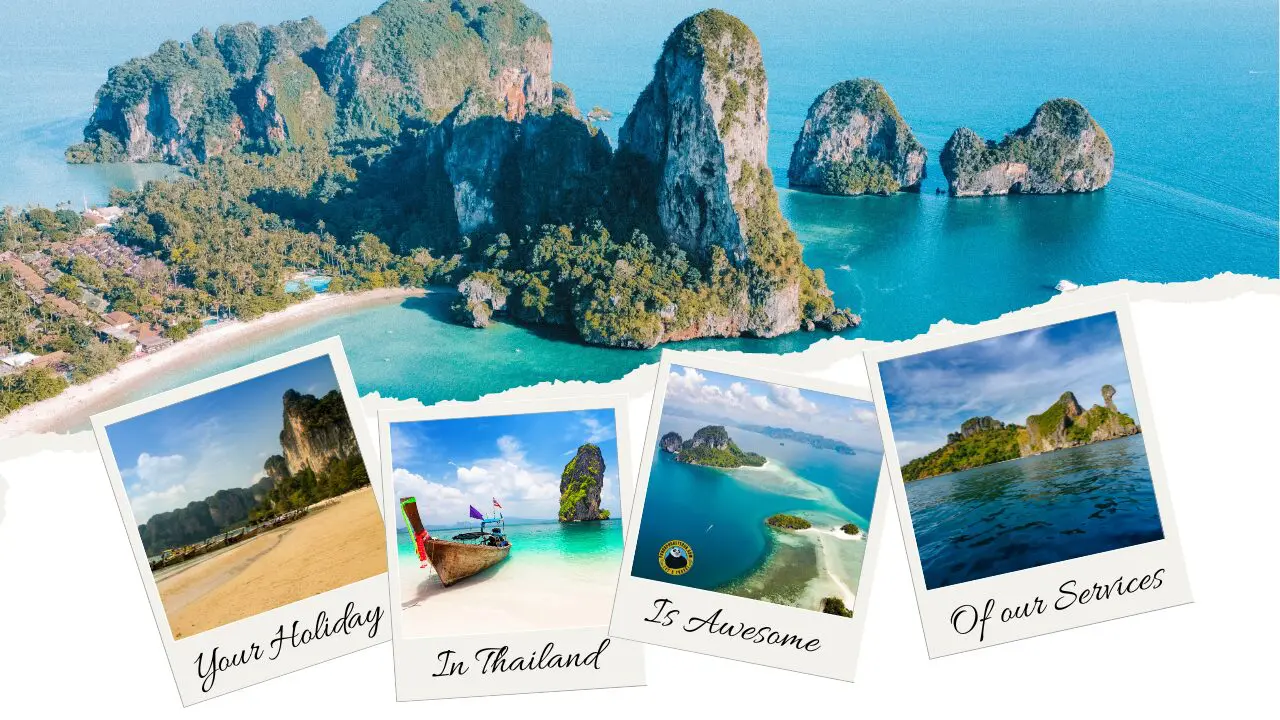
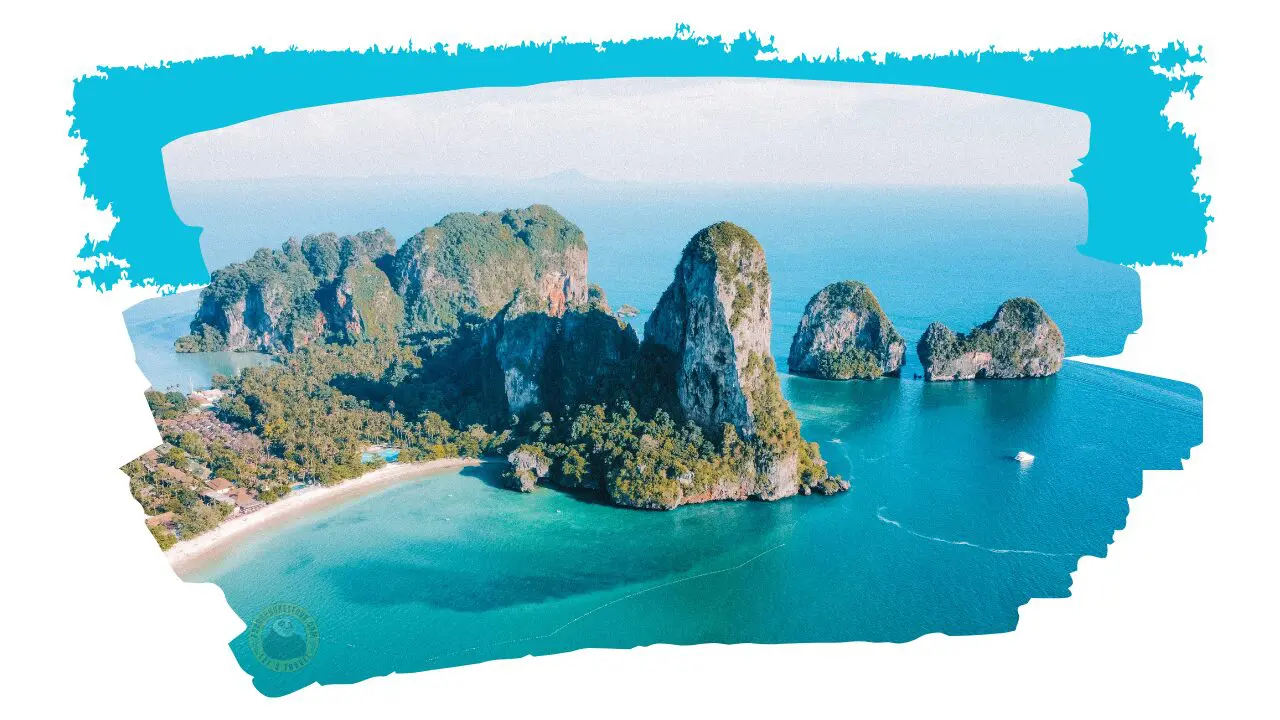
Railay Beach
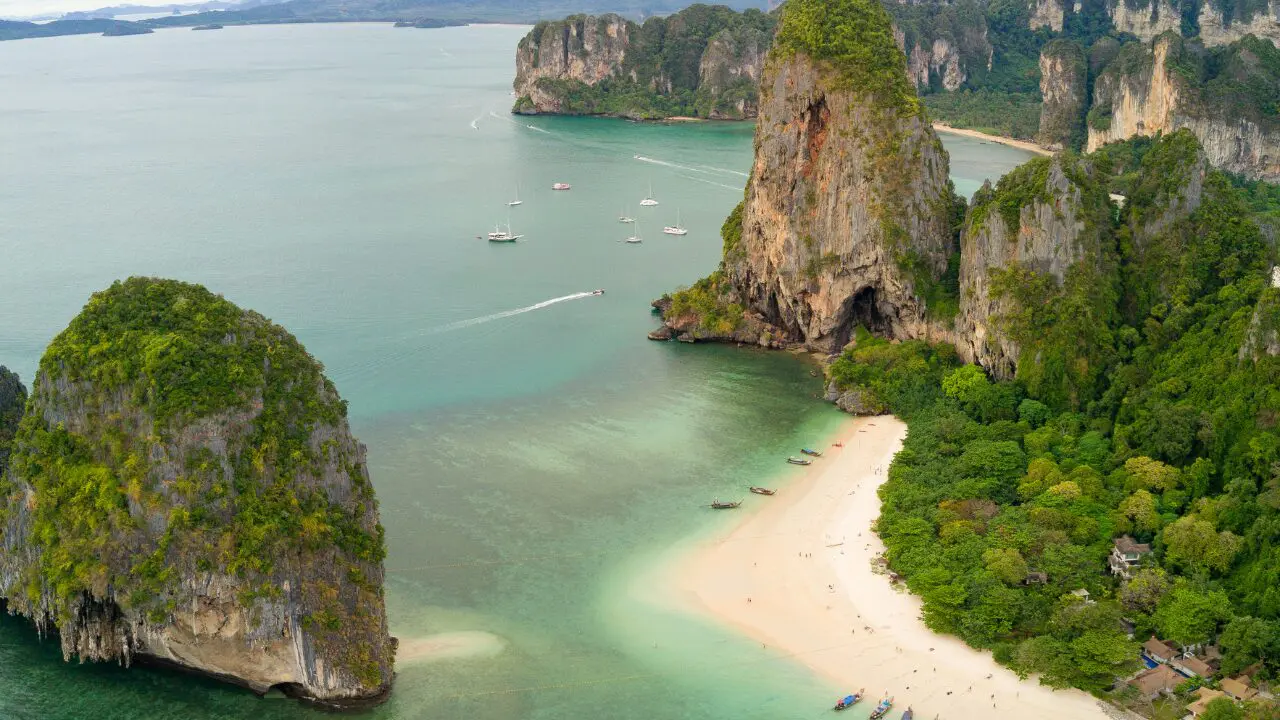
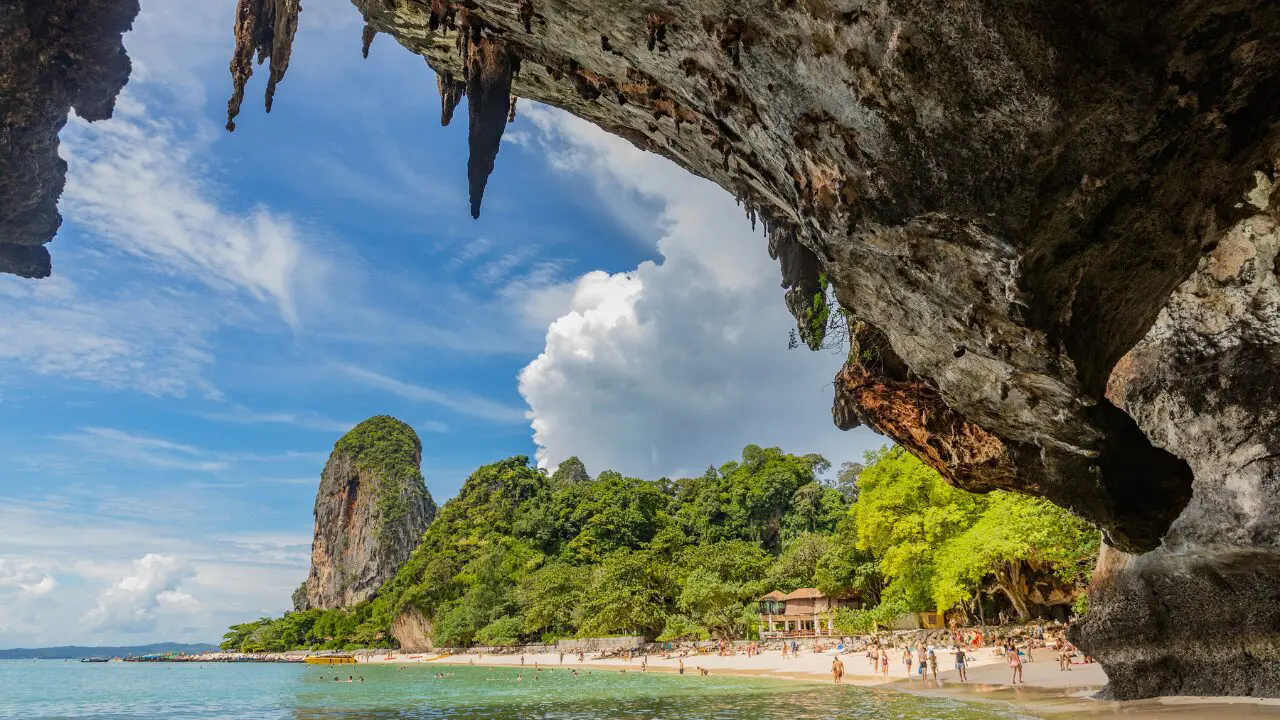
RAILAY, also known as Rai Leh, is a small peninsula located between Krabi Town and Ao Nang in Thailand. It can only be reached by boat because towering limestone cliffs cut off access by land. These cliffs draw climbers from all over the world, but the area is also very popular for its beautiful beaches and its quiet, relaxed atmosphere.
MORE INFORMATION
07:45 – 08:30 > Hotel / bungalow / resort pickup: AO NANG AREA ONLY.
09:00 > Departure from the pier.
All times are approximate: they depend on the location of your accommodation, the tides and the weather. The exact pickup time will be confirmed after booking.
-
Phra Nang: Famous for its iconic beach and scenery.
-
West Railay: The main hub of white-sand beaches and upscale resorts.
-
East Railay: An area with a pier, a promenade, shops, restaurants and mid-range accommodation.
-
Ton Sai: Geared toward climbers and backpackers, offering a more rustic, laid-back atmosphere compared with the glamour of West Railay or the commercial offerings of the east side.
-
Features: This is where boats arriving from Krabi dock. The beach is mostly covered by dense mangroves, so it is not suitable for swimming.
-
Promenade: At the northern end of the shoreline there is a commercial area along a promenade packed with restaurants, bars, services (such as a Muay Thai school) and resorts that are cheaper than those in West Railay.
-
Points of interest: On the upper trail leading to Ton Sai lies a cave (Diamond Cave), which has a walkway that lets you go inside. The southern end of the promenade gives access to a public trail that winds beneath towering limestone cliffs and connects with Phra Nang Beach.
-
Features: Connected to the east coast by paths through the large resorts or by jungle trails, it is the main beach for swimmers. It is flanked on both sides by tall limestone cliffs.
-
Shopping area: The heart of West Railay is a short pedestrian street (walking street) lined with shops and restaurants.
TUB ISLAND
KOH TUB (TALAY WAEK IN KRABI)
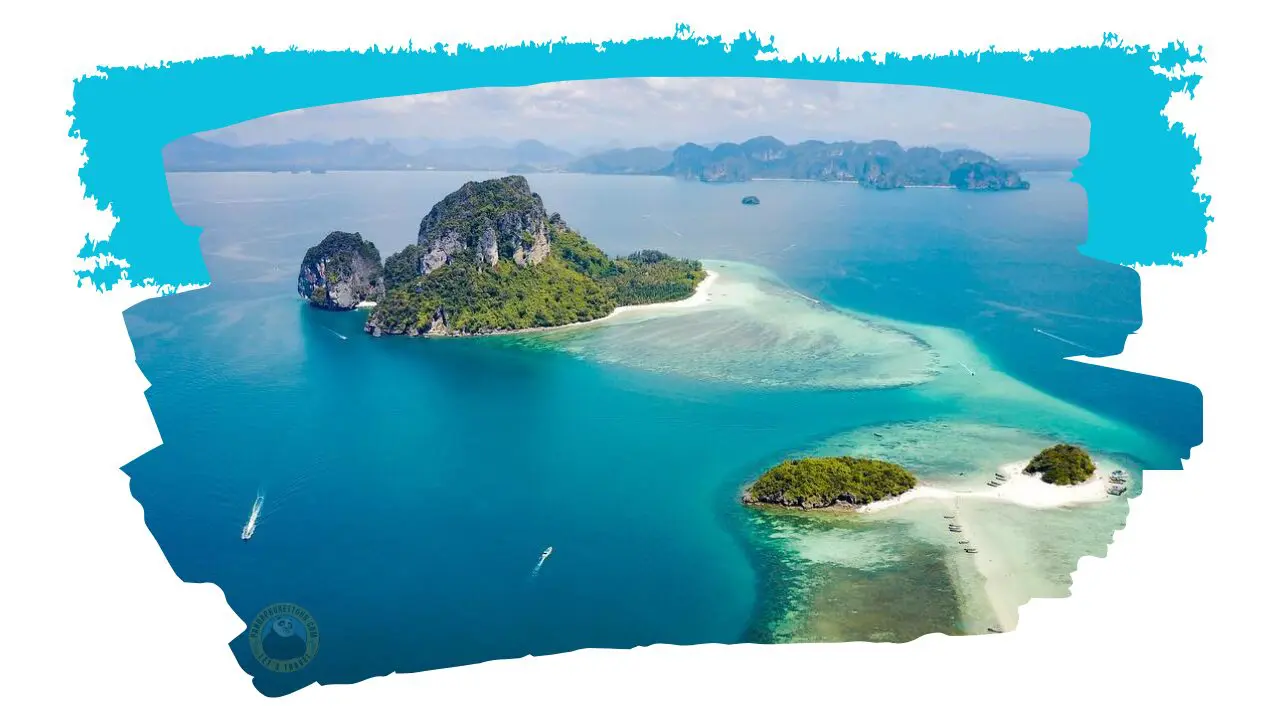
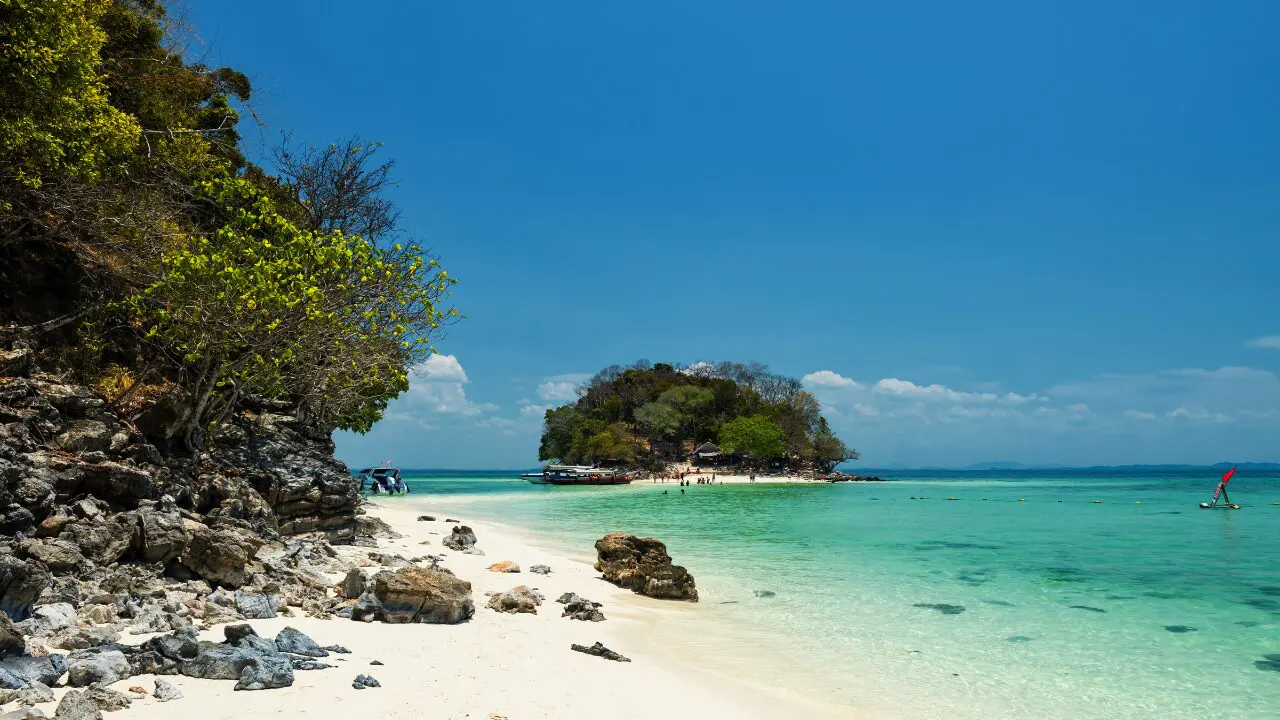
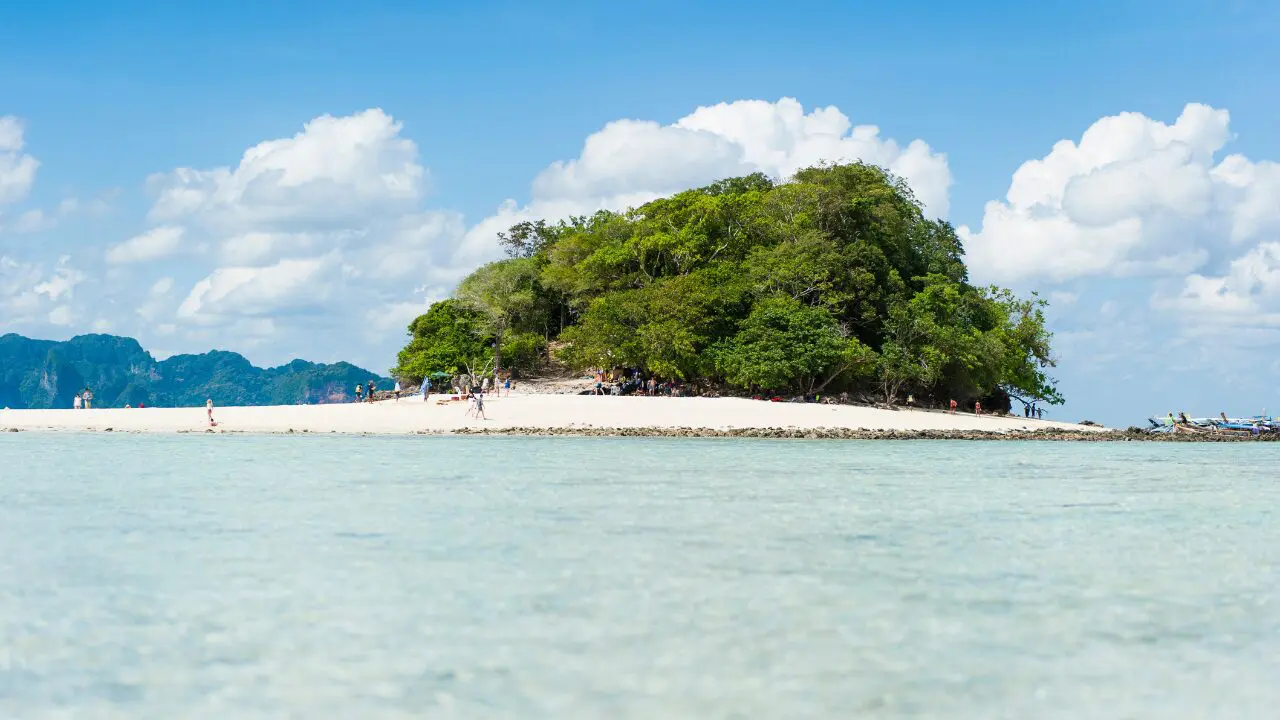
SNORKELING: TUB ISLAND (KOH TUB / KOH THAP) Tub Island (known locally as Koh Tub or Koh Thap) has no extensive record of ancient human settlement or any significant political history. Instead, its story is defined by its geological evolution and its rise as one of Thailand's most famous natural marine landmarks, thanks to the phenomenon known as Talay Waek (the divided sea).
MORE INFORMATION
GEOLOGICAL FORMATION AND NATURE
-
Age-old limestone: Like much of the Krabi coast and the neighboring Poda archipelago, Tub Island was born from massive tectonic movements and coral reef formations millions of years ago, leaving behind its characteristic limestone karst bases.
-
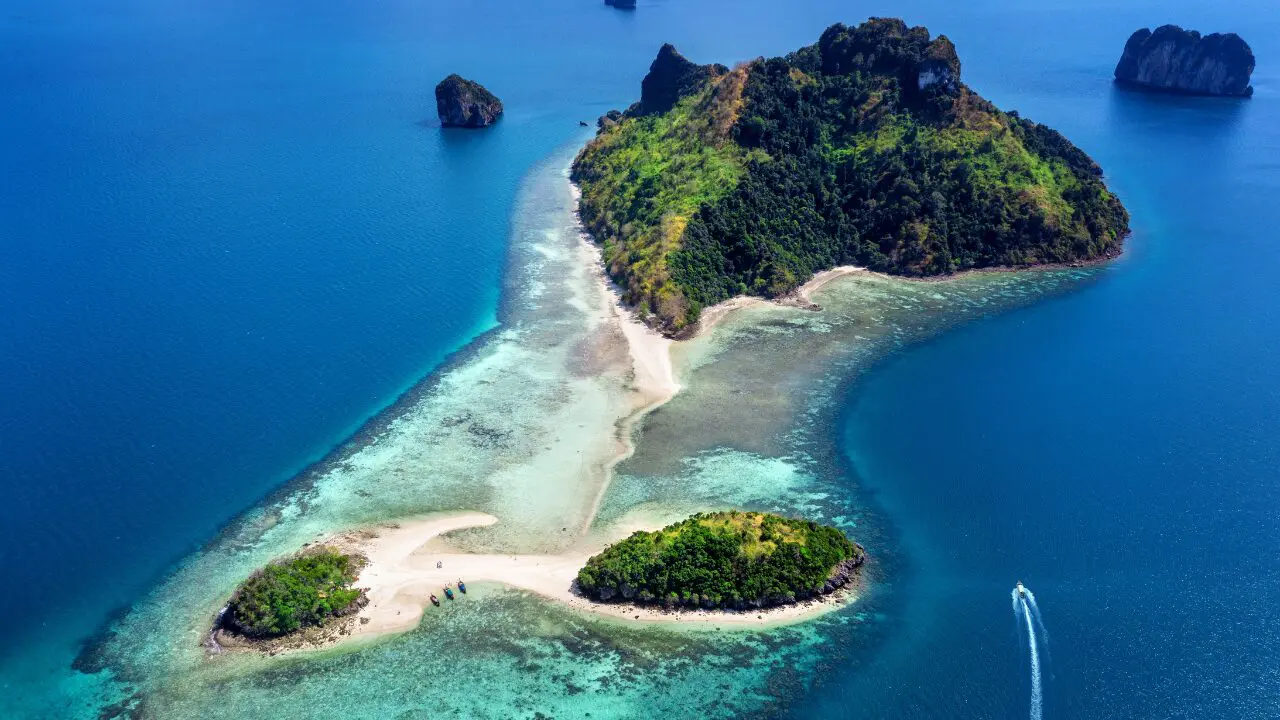
The Talay Waek phenomenon: Over the centuries, tidal currents deposited white sand and crushed coral fragments precisely between Koh Tub, Koh Mor and Chicken Island (Koh Kai).
-
The divided sea: Long before modern tourism, local fishermen and coastal residents of Krabi witnessed the daily miracle of the sea “parting” at low tide, creating a temporary walkway of fine white sand between the islands.
-
From local secret to global destination: For generations, this sandbar was known only to the local sea gypsies (Urak Lawoi) and regional fishermen who sailed the shallow emerald waters of the Andaman Sea.
-
The rise of the 4 Islands Tour: As Krabi developed into an international tourist destination in the late 20th century, Koh Tub became the main attraction of the famous day trips known as the “Four Islands Tour”, which run from Ao Nang and Railay Beach.
-
Protected status: Today, the island is carefully managed under marine national park regulations to protect its fragile coral reefs and its white sandbar from mass tourism.
CHICKEN ISLAND
KOH KAI
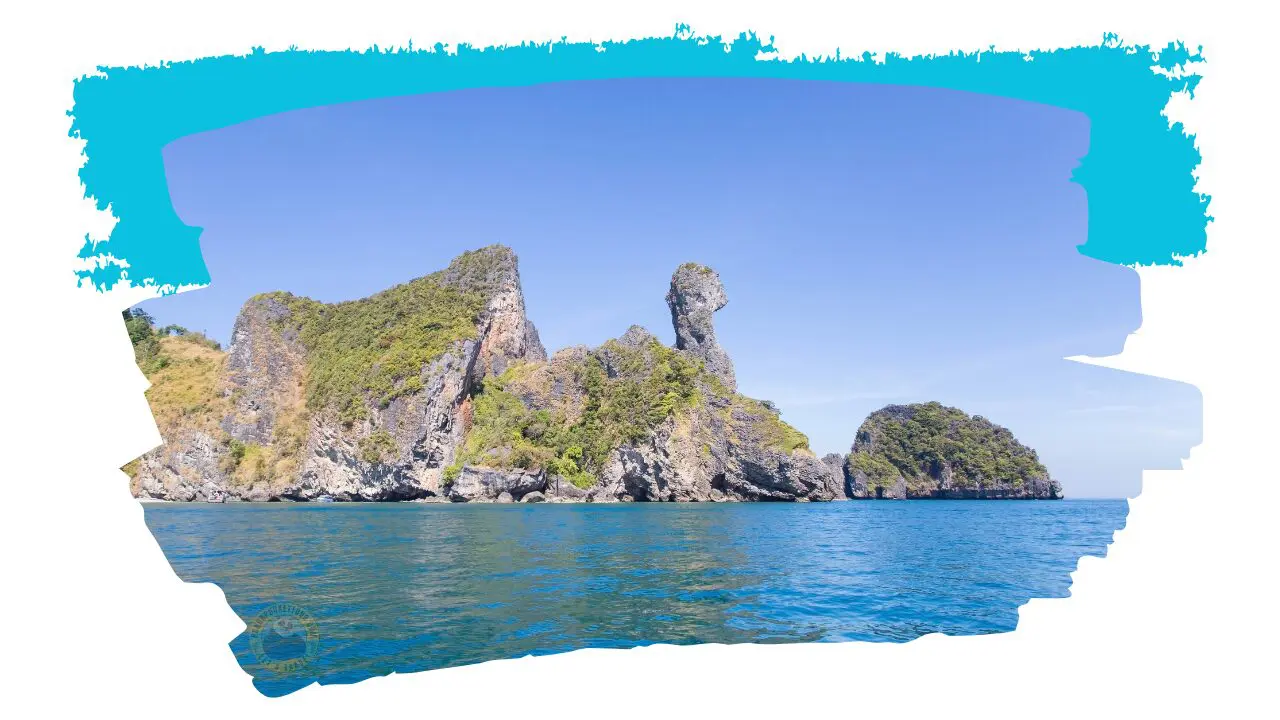
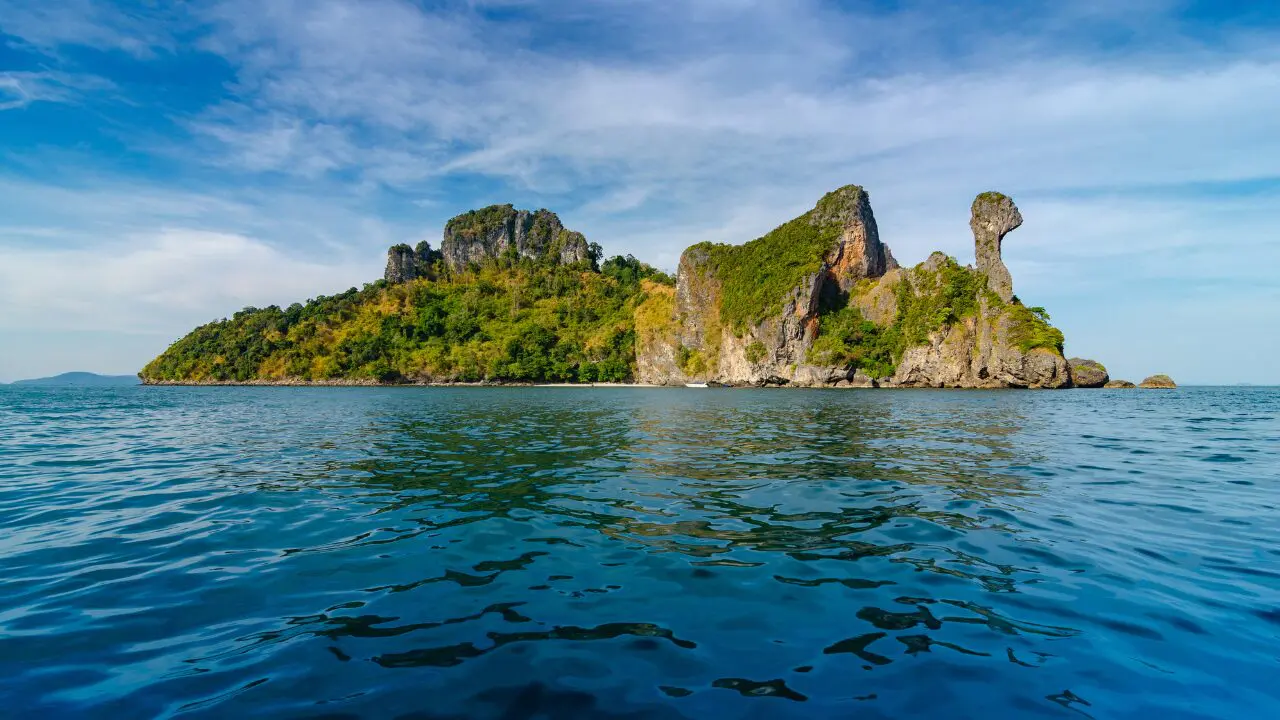
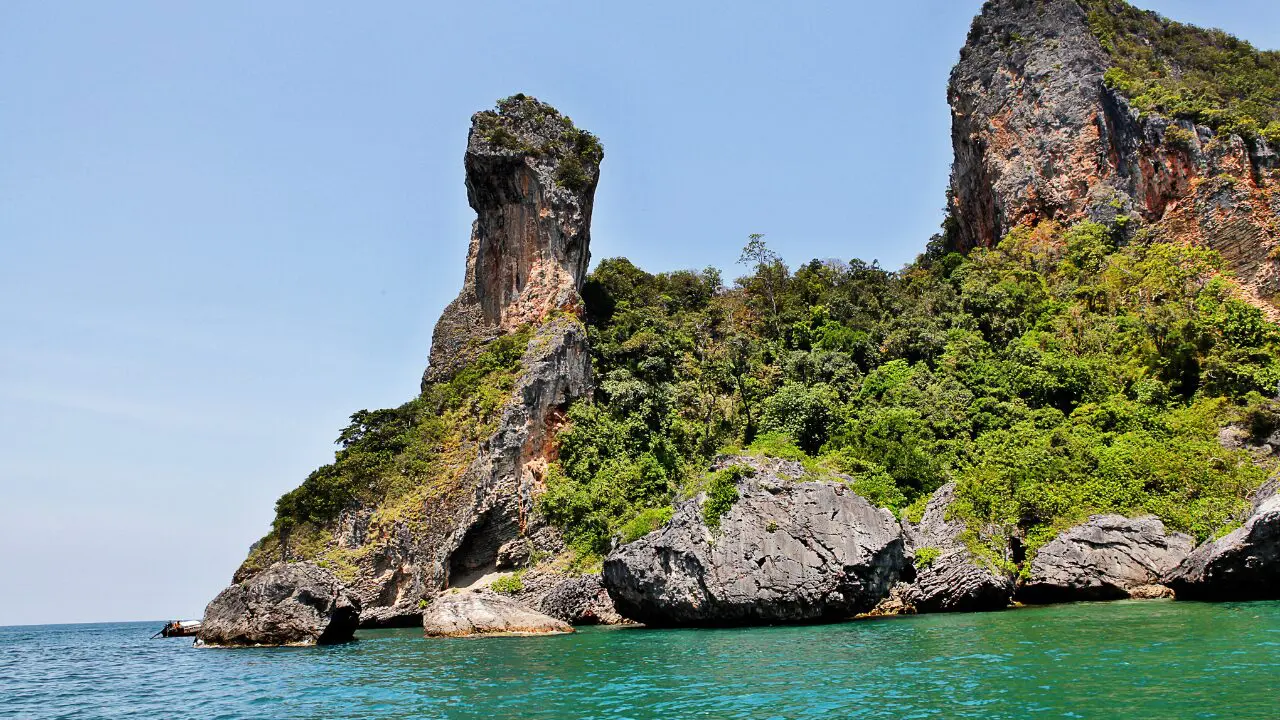
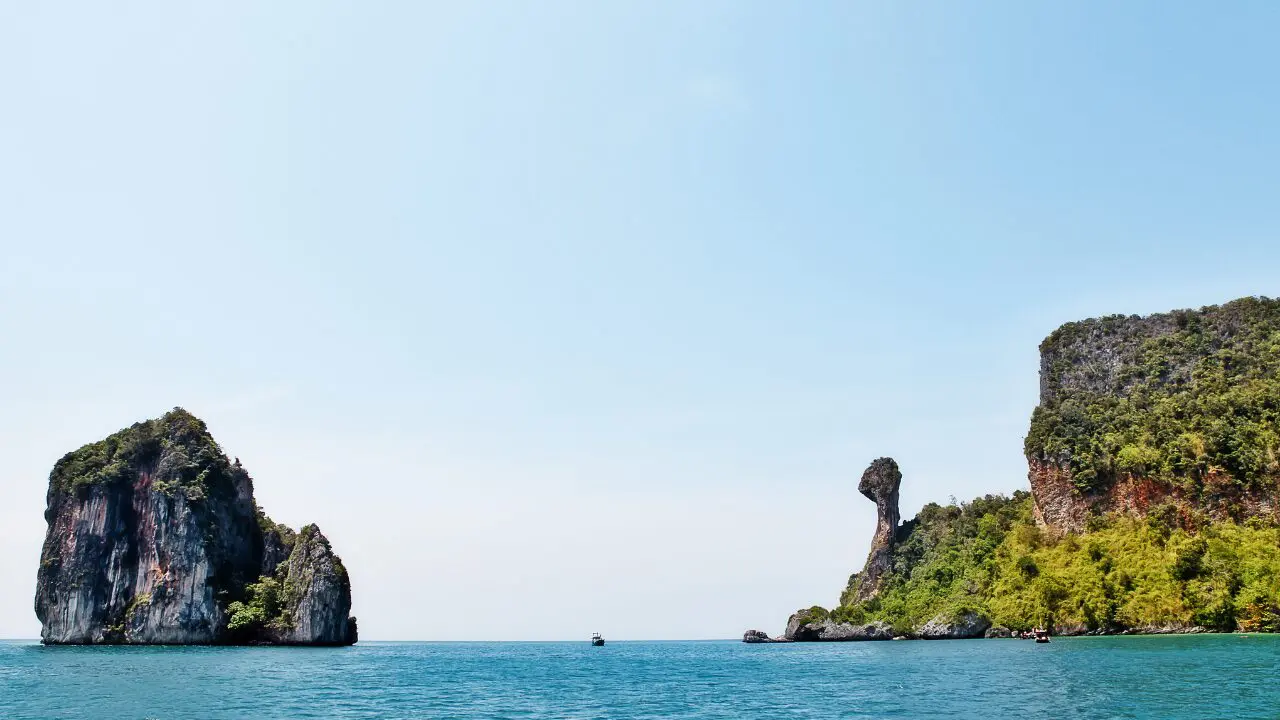
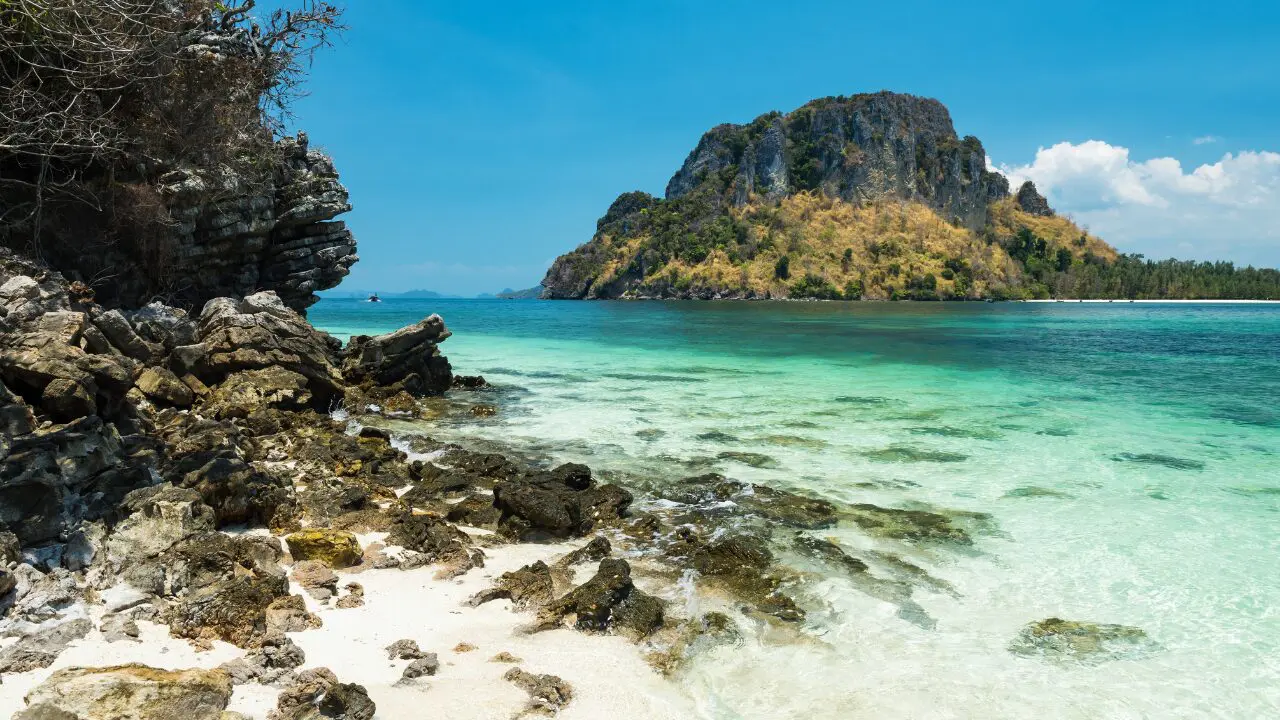
SIGHTSEEING: CHICKEN ISLAND (KOH KAI) Chicken Island (known locally as Koh Kai or “Chicken Island”) has no real ancient history and no permanent settlements. Historically, local fishermen used this uninhabited limestone formation as a temporary shelter and a rich fishing ground. It rose to immense fame in the early 2000s, when it became a must-see stop on the popular boat trips around the islands of Krabi.
MORE INFORMATION
-
Origin of the name: It is named after its unusual rock formation, which resembles the head and neck of a chicken.
-
No permanent settlements: Like many islands in the region, it has a limited historical record and has never had permanent residents.
-
Geographic icon: Its distinctive limestone silhouette and natural beauty have made it one of the most notable landmarks in the area.
-
Geology: It is made of limestone, a sedimentary rock formed over millions of years by the accumulation of marine organisms and subsequent geological processes.
-
Marine life: Its rocky cliffs and underwater formations provide an ideal habitat for a variety of marine species, including corals, tropical fish and invertebrates.
PODA ISLAND
TIME TO RELAX
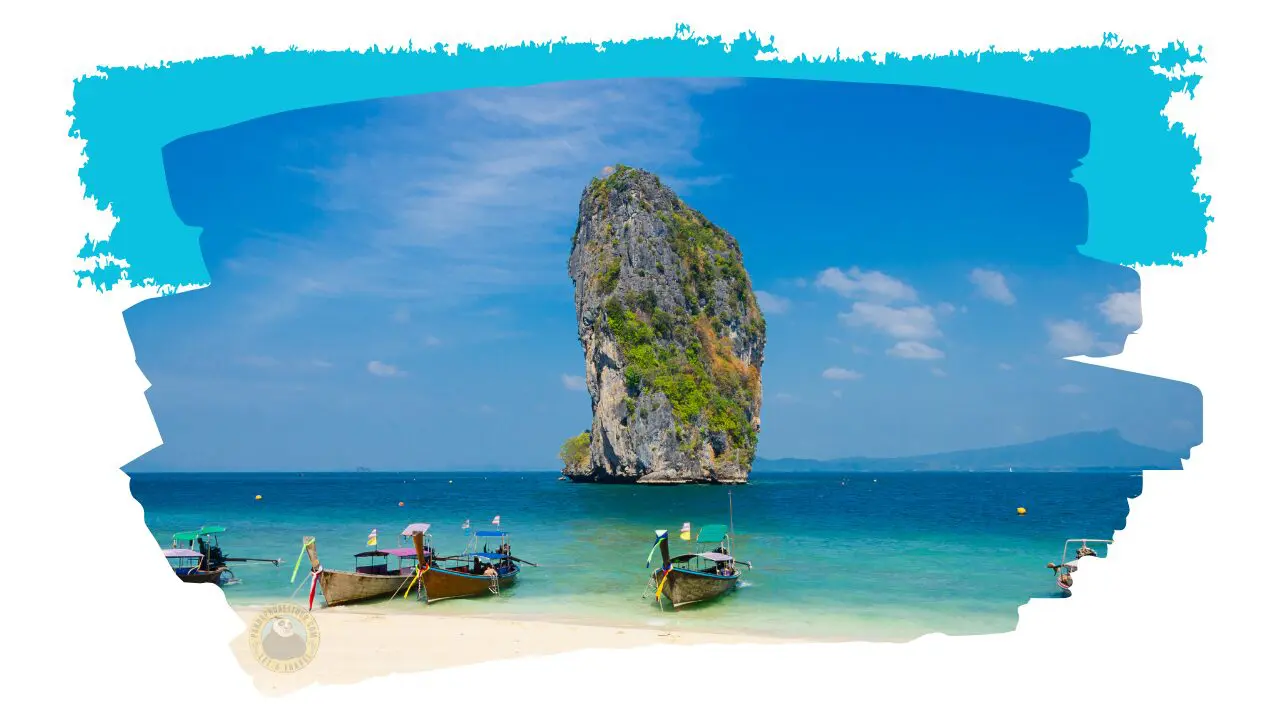
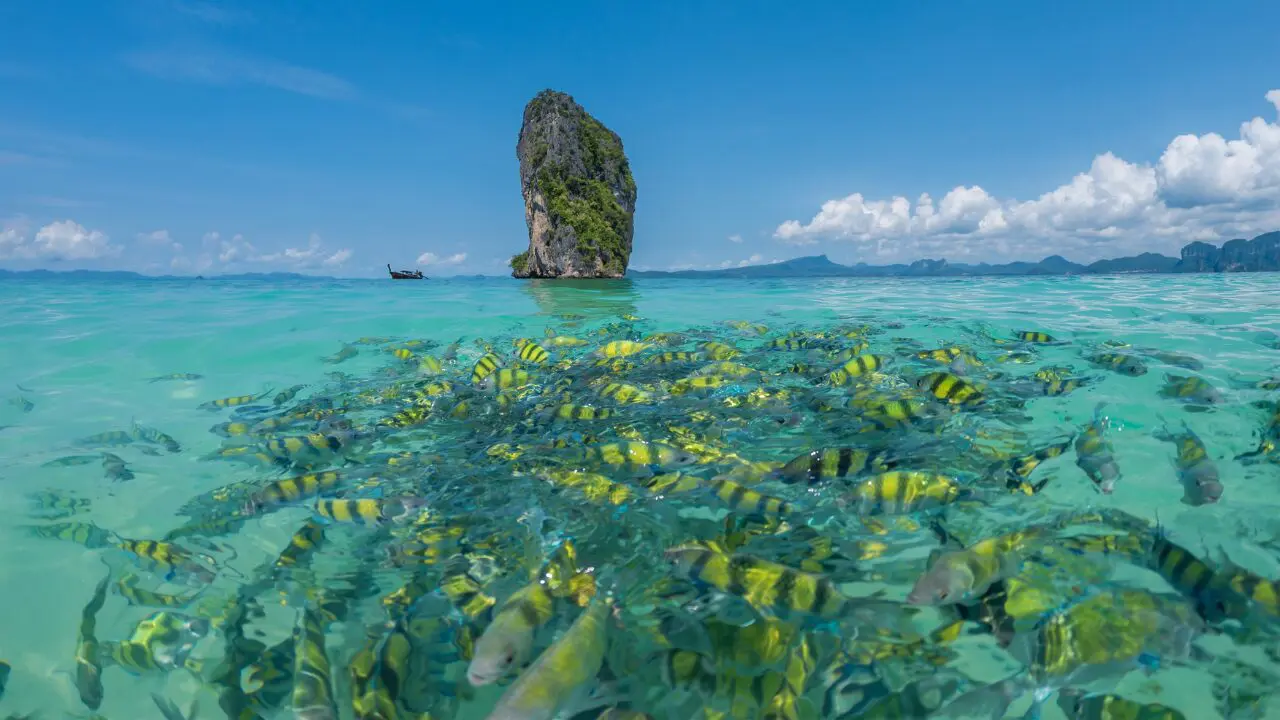
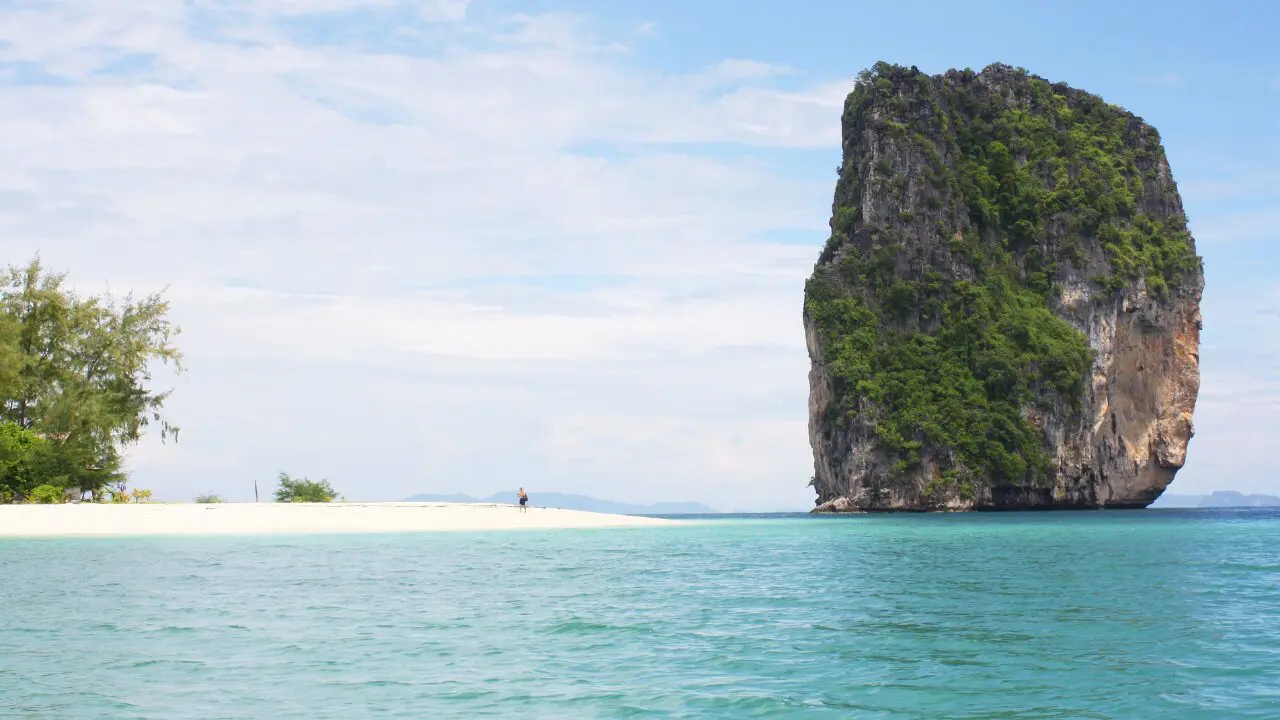
KOH PODA: PODA ISLAND (KOH PODA) is an uninhabited island located 8 kilometers off the coast of Ao Nang, in Krabi (Thailand). With no record of ancient human settlement, its history is defined by its geological formation as a limestone karst outcrop and its modern transformation into a protected treasure within a national park.
MORE INFORMATION
TIME ON THE BEACH
13:30 > Departure from Poda Island back to our pier.
14:00 > Return to the pier: transfer by van to the hotel.
-
Main attraction: It is famous for its stunning white-sand beaches, crystal-clear turquoise waters and towering limestone cliffs, which make it a very popular destination for beach and nature lovers.
-
Uninhabited, protected island: It has no permanent population and is part of Hat Noppharat Thara-Mu Ko Phi Phi National Park, which aims to preserve the natural beauty and marine ecosystem of the area.
-
Activities: Visitors can enjoy activities such as swimming, snorkeling, sunbathing and exploring the island's trails.
-
History: Like many islands in the region, it has a limited historical record and was never permanently inhabited in the past.
-
Geological composition: It is made up mainly of limestone, a sedimentary rock formed over millions of years by the accumulation of marine organisms.
-
Biodiversity and marine life: Its rocky cliffs and underwater formations provide an ideal habitat for a wide variety of species, such as corals, tropical fish and other marine organisms.
-
Snorkeling: Swimming and snorkeling in the surrounding waters offers the perfect opportunity to explore its vibrant coral reefs and appreciate the rich biodiversity of its ecosystem.





4 ISLANDS TOUR IN KRABI
GROUP TOUR
A new day-trip experience from Krabi: turn your vacation into unforgettable memories of the Andaman Sea. A great time on the beach, snorkeling and relaxing. The most beautiful place to visit in Thailand.
MORE INFORMATION AND WHAT THE TOUR INCLUDES
INCLUDES:
-
Round-trip transfer
-
Drinking water and soft drinks
-
Seasonal fruits
-
Buffet lunch (Thai food)
-
Snorkeling gear (snorkel and mask)
-
Life jacket
-
Accident insurance
-
English speaking guide
NOT INCLUDED:
-
Entrance to the National Park
IMPORTANT INFORMATION:
-
The tour itinerary may change without notice depending on tides and weather.
-
Children and babies must be accompanied by an adult at all times.
-
Not recommended for people with heart conditions, pregnant women, people with back or neck problems or other serious medical conditions.
-
Please bring your own swimsuit, a change of clothes, towel, sunscreen, hat, sunglasses, camera, GoPro and personal medication.
-
Vegetarian option available; please let us know when booking if you need it.

4 ISLANDS BY SPEEDBOAT FROM KRABI
Railay Beach
THE EXPERIENCE
RAILAY, also known as Rai Leh, is a small peninsula located between Krabi Town and Ao Nang in Thailand. It can only be reached by boat because towering limestone cliffs cut off access by land. These cliffs draw climbers from all over the world, but the area is also very popular for its beautiful beaches and its quiet, relaxed atmosphere.
MORE INFORMATION
07:45 – 08:30 > Hotel / bungalow / resort pickup: AO NANG AREA ONLY.
09:00 > Departure from the pier.
All times are approximate: they depend on the location of your accommodation, the tides and the weather. The exact pickup time will be confirmed after booking.
-
Phra Nang: Famous for its iconic beach and scenery.
-
West Railay: The main hub of white-sand beaches and upscale resorts.
-
East Railay: An area with a pier, a promenade, shops, restaurants and mid-range accommodation.
-
Ton Sai: Geared toward climbers and backpackers, offering a more rustic, laid-back atmosphere compared with the glamour of West Railay or the commercial offerings of the east side.
-
Features: This is where boats arriving from Krabi dock. The beach is mostly covered by dense mangroves, so it is not suitable for swimming.
-
Promenade: At the northern end of the shoreline there is a commercial area along a promenade packed with restaurants, bars, services (such as a Muay Thai school) and resorts that are cheaper than those in West Railay.
-
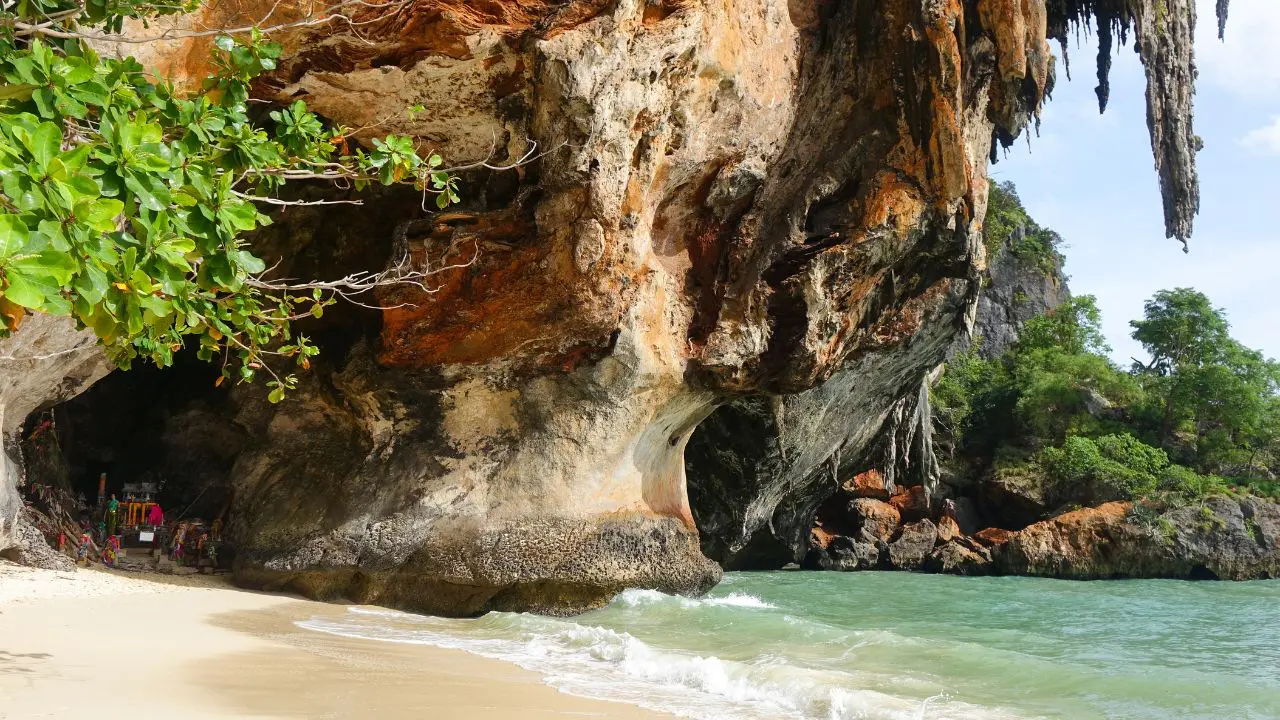
Points of interest: On the upper trail leading to Ton Sai lies a cave (Diamond Cave), which has a walkway that lets you go inside. The southern end of the promenade gives access to a public trail that winds beneath towering limestone cliffs and connects with Phra Nang Beach.
-
Features: Connected to the east coast by paths through the large resorts or by jungle trails, it is the main beach for swimmers. It is flanked on both sides by tall limestone cliffs.
-
Shopping area: The heart of West Railay is a short pedestrian street (walking street) lined with shops and restaurants.
KOH TUB (TALAY WAEK IN KRABI)
SNORKELING: TUB ISLAND (KOH TUB / KOH THAP) Tub Island (known locally as Koh Tub or Koh Thap) has no extensive record of ancient human settlement or any significant political history. Instead, its story is defined by its geological evolution and its rise as one of Thailand's most famous natural marine landmarks, thanks to the phenomenon known as Talay Waek (the divided sea).
MORE INFORMATION
GEOLOGICAL FORMATION AND NATURE
-
Age-old limestone: Like much of the Krabi coast and the neighboring Poda archipelago, Tub Island was born from massive tectonic movements and coral reef formations millions of years ago, leaving behind its characteristic limestone karst bases.
-
The Talay Waek phenomenon: Over the centuries, tidal currents deposited white sand and crushed coral fragments precisely between Koh Tub, Koh Mor and Chicken Island (Koh Kai).
-
The divided sea: Long before modern tourism, local fishermen and coastal residents of Krabi witnessed the daily miracle of the sea “parting” at low tide, creating a temporary walkway of fine white sand between the islands.
-
From local secret to global destination: For generations, this sandbar was known only to the local sea gypsies (Urak Lawoi) and regional fishermen who sailed the shallow emerald waters of the Andaman Sea.
-
The rise of the 4 Islands Tour: As Krabi developed into an international tourist destination in the late 20th century, Koh Tub became the main attraction of the famous day trips known as the “Four Islands Tour”, which run from Ao Nang and Railay Beach.
-
Protected status: Today, the island is carefully managed under marine national park regulations to protect its fragile coral reefs and its white sandbar from mass tourism.
KOH KAI
SIGHTSEEING: CHICKEN ISLAND (KOH KAI) Chicken Island (known locally as Koh Kai or “Chicken Island”) has no real ancient history and no permanent settlements. Historically, local fishermen used this uninhabited limestone formation as a temporary shelter and a rich fishing ground. It rose to immense fame in the early 2000s, when it became a must-see stop on the popular boat trips around the islands of Krabi.
MORE INFORMATION
-
Origin of the name: It is named after its unusual rock formation, which resembles the head and neck of a chicken.
-
No permanent settlements: Like many islands in the region, it has a limited historical record and has never had permanent residents.
-
Geographic icon: Its distinctive limestone silhouette and natural beauty have made it one of the most notable landmarks in the area.
-
Geology: It is made of limestone, a sedimentary rock formed over millions of years by the accumulation of marine organisms and subsequent geological processes.
-
Marine life: Its rocky cliffs and underwater formations provide an ideal habitat for a variety of marine species, including corals, tropical fish and invertebrates.
TIME TO RELAX
KOH PODA: PODA ISLAND (KOH PODA) is an uninhabited island located 8 kilometers off the coast of Ao Nang, in Krabi (Thailand). With no record of ancient human settlement, its history is defined by its geological formation as a limestone karst outcrop and its modern transformation into a protected treasure within a national park.
MORE INFORMATION
TIME ON THE BEACH
13:30 > Departure from Poda Island back to our pier.
14:00 > Return to the pier: transfer by van to the hotel.
-
Main attraction: It is famous for its stunning white-sand beaches, crystal-clear turquoise waters and towering limestone cliffs, which make it a very popular destination for beach and nature lovers.
-
Uninhabited, protected island: It has no permanent population and is part of Hat Noppharat Thara-Mu Ko Phi Phi National Park, which aims to preserve the natural beauty and marine ecosystem of the area.
-
Activities: Visitors can enjoy activities such as swimming, snorkeling, sunbathing and exploring the island's trails.
-
History: Like many islands in the region, it has a limited historical record and was never permanently inhabited in the past.
-
Geological composition: It is made up mainly of limestone, a sedimentary rock formed over millions of years by the accumulation of marine organisms.
-
Biodiversity and marine life: Its rocky cliffs and underwater formations provide an ideal habitat for a wide variety of species, such as corals, tropical fish and other marine organisms.
-
Snorkeling: Swimming and snorkeling in the surrounding waters offers the perfect opportunity to explore its vibrant coral reefs and appreciate the rich biodiversity of its ecosystem.
4 ISLANDS TOUR IN KRABI
GROUP TOUR
A new day-trip experience from Krabi: turn your vacation into unforgettable memories of the Andaman Sea. A great time on the beach, snorkeling and relaxing. The most beautiful place to visit in Thailand.
MORE INFORMATION AND WHAT THE TOUR INCLUDES
INCLUDES:
-
Round-trip transfer
-
Drinking water and soft drinks
-
Seasonal fruits
-
Buffet lunch (Thai food)
-
Snorkeling gear (snorkel and mask)
-
Life jacket
-
Accident insurance
-
English speaking guide
NOT INCLUDED:
-
Entrance to the National Park
IMPORTANT INFORMATION:
-
The tour itinerary may change without notice depending on tides and weather.
-
Children and babies must be accompanied by an adult at all times.
-
Not recommended for people with heart conditions, pregnant women, people with back or neck problems or other serious medical conditions.
-
Please bring your own swimsuit, a change of clothes, towel, sunscreen, hat, sunglasses, camera, GoPro and personal medication.
-
Vegetarian option available; please let us know when booking if you need it.
 Español
  Français
  English
  Italiano
  Português